
A line can restart cleanly and still not return to the way it was running before.
Machines start, product moves, and everything appears to be back in operation. From a distance, it looks like the system has recovered.
But the first moments after restart tell a different story.
Sections pick up at slightly different times. Some begin to move immediately, while others take longer to establish flow.
The sequence is no longer aligned.
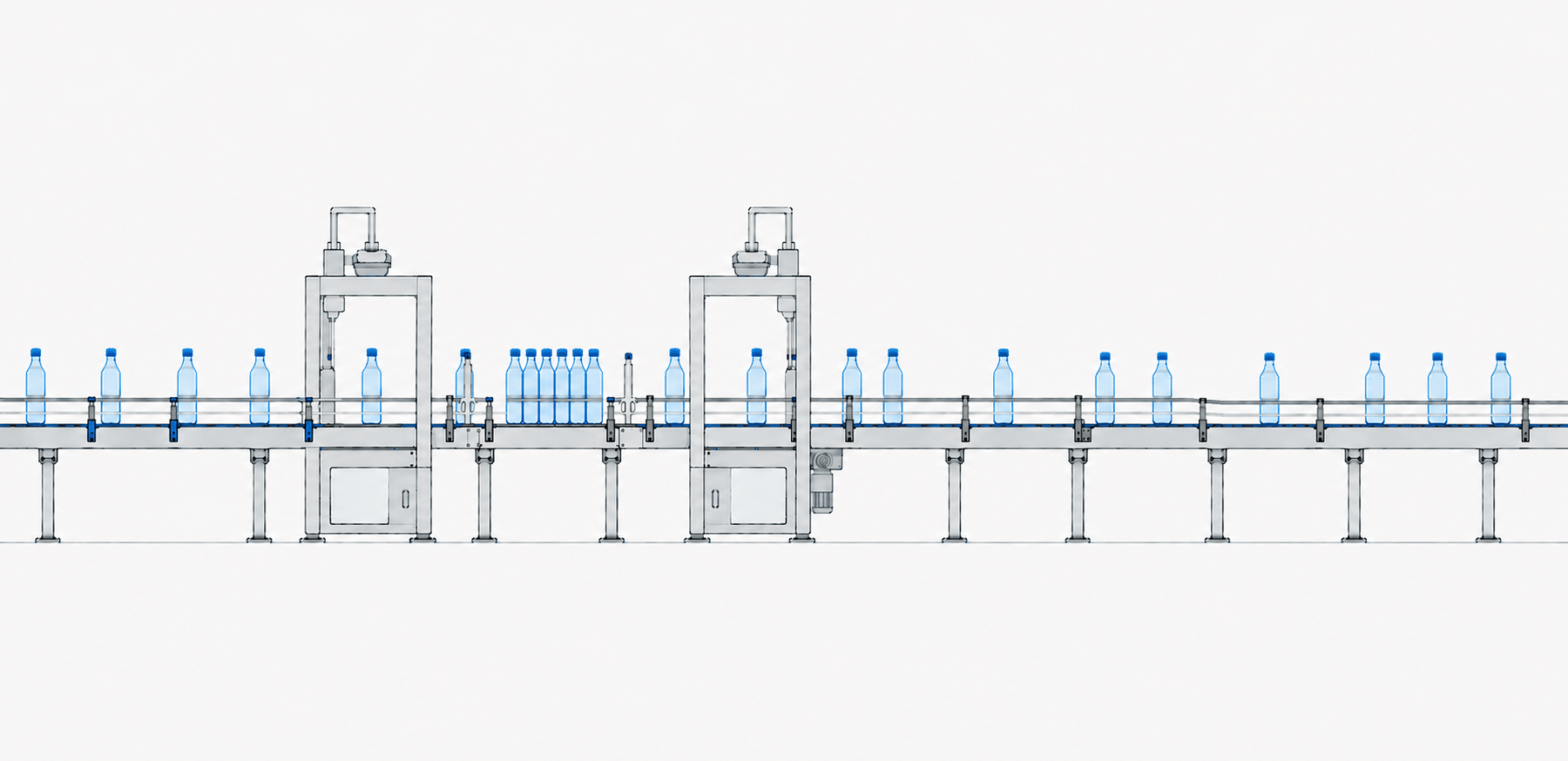
You can see it in the way the first product moves through the line. It does not follow the same pattern as before the stop. The timing between sections has shifted, and the relationships that held the system in balance are no longer the same.
This is the difference between running and being restored.
The line is moving again, but it has not returned to the same operating condition. The balance has changed, and that change carries forward as the line continues to run.
Each restart moves the system slightly further away from its original state. The effect compounds, making the line less predictable and more sensitive to further disruption.
This is why lines with frequent stops often feel inconsistent. They are not returning to a stable baseline, but moving between slightly different conditions each time they restart.
You often see this shaped by how product is held and released during the stop.
The question is not whether the line has restarted, but how the product held during the stop is released and reshapes flow as it moves through the system.
The way held product is released often reshapes flow further downstream as accumulation carries variation forward through the line.
About the Author
His work focuses on how planning decisions, system design, and equipment interaction influence overall line performance and long-term stability.
Jon works with manufacturing teams to understand how packaging lines behave under real operating conditions and where reliability is lost across the system.