
A line can be running and still not be under control.
You can see it in the way operators work around it. Speeds are adjusted, small issues are managed as they appear, and the focus stays on keeping product moving. Nothing stops for long, and from a distance it can look like the line is performing as it should.
But it depends on constant intervention.
There is a steady stream of small decisions being made to keep things going. Speeds are trimmed, machines are nudged, and flow is managed by feel rather than by the system holding its own balance.
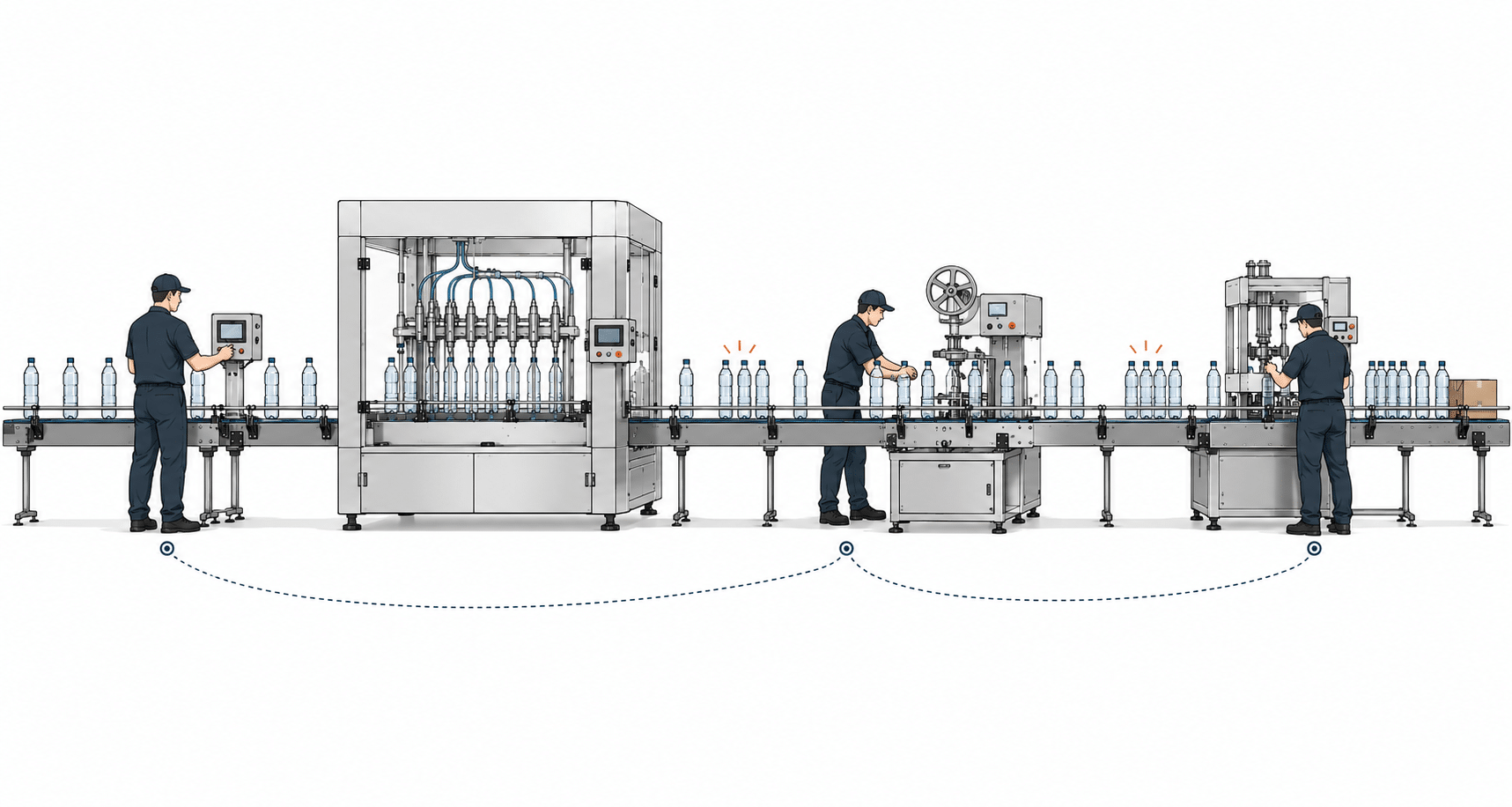
This is often mistaken for control. The line is running, output is being maintained, and problems appear to be handled quickly.
In reality, the behaviour is being contained rather than resolved.
Remove that intervention, and the same issues show up immediately. What looks like stability is actually a reliance on experience and attention to prevent disruption from developing.
Over time, this creates a different kind of pressure. The system is no longer doing the work of maintaining consistency. That responsibility shifts onto the people running it.
The line becomes dependent on the person managing it, rather than the system holding its own balance.
You often see this alongside lines that appear to run steadily but require increasing effort to keep them there.
The question is not whether the line is being kept running, but what that constant intervention is masking as performance begins to drift over time.
About the Author
Jon works with manufacturing teams to understand how packaging lines behave under real operating conditions and where reliability is lost across the system.
His work focuses on how planning decisions, system design, and equipment interaction influence overall line performance and long-term stability.