
Accumulation is often seen as protection.
The assumption is that if there is enough buffer, the line can absorb disruption and continue running without impact.
In practice, the way accumulation behaves changes how that disruption moves through the system.
When product builds up, it does not do so evenly. It collects quickly and then releases based on demand, not balance.
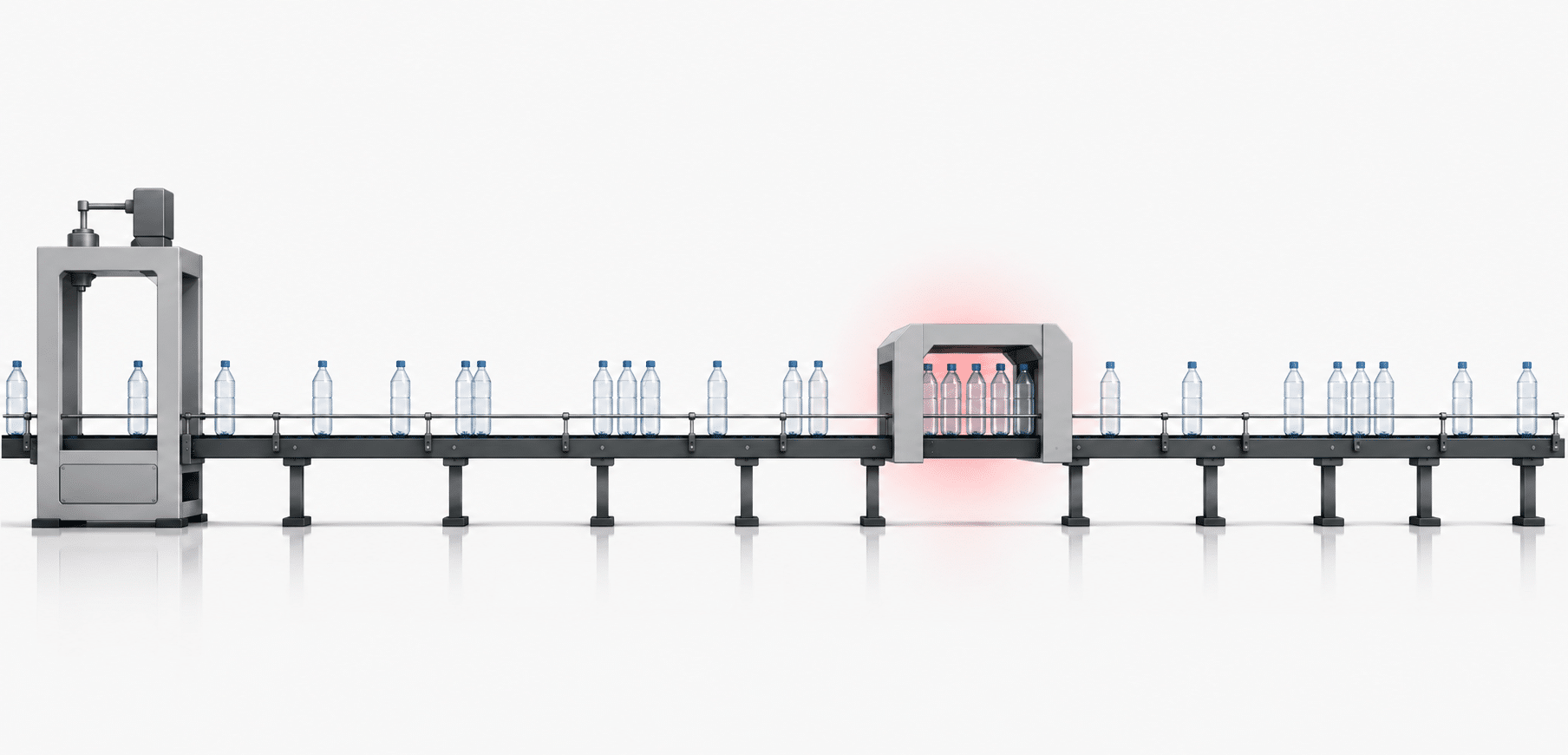
As the line restarts, downstream sections begin to pull as soon as product is available, while upstream continues to feed in behind it. The result is a change in flow that moves through the system in waves.
You can see it as short surges of product, followed by slight gaps, repeating as the buffer clears.
This is where accumulation stops acting as a neutral buffer.
Instead of removing variation, it redistributes it. Small differences are carried forward and spread across the line in a different form.
From an operational point of view, this is easy to overlook. The presence of accumulation gives the impression that the system is protected.
In reality, it is shaping how the line behaves after every disruption.
This is why adding more buffer does not always solve the problem. It may delay where the impact is seen, but it also changes how that impact moves through the system.
The question is not just how accumulation behaves, but how each restart reintroduces that variation in a different pattern across the line.
About the Author
Jon works with manufacturing teams to understand how packaging lines behave under real operating conditions and where reliability is lost across the system.
His work focuses on how planning decisions, system design, and equipment interaction influence overall line performance and long-term stability.