
A line can run for long periods without stopping and still not be performing as expected.
Output looks steady, production continues, and nothing stands out as a clear issue. From a distance, it appears to be doing what it should.
But over time, the results begin to fall short.
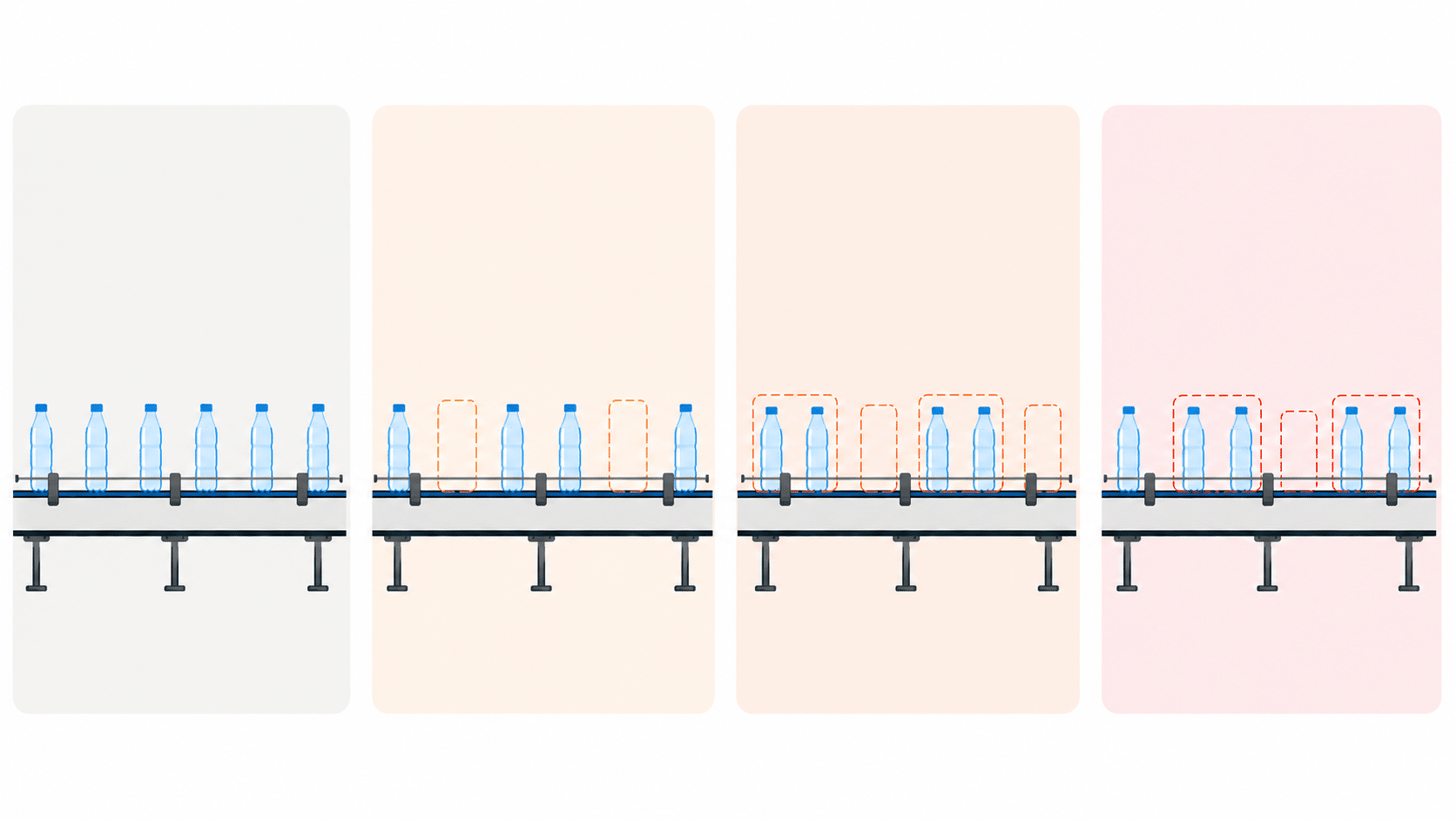
Small differences build across a shift. Output drops slightly below target, recovery takes longer than it should, and the line becomes less predictable without any single obvious cause.
This is often missed because performance is judged in broad terms. If the line is running and producing close to its target, it is treated as stable.
What isn’t visible is the gradual loss that builds over time.
Each small variation affects the next. The system becomes less efficient at recovering and more sensitive to minor disruption. It still runs, but it does not return the same output for the same conditions.
Over the course of a shift, this is where performance is lost without a clear event to point to. Nothing has failed, but the system is no longer operating at the level it should.
You often see this in lines that are being actively managed to keep output consistent, even as the underlying performance drifts.
The question is not just why the line drifts, but what happens when there is no space left to absorb that variation and it begins to show more abruptly.
About the Author
Jon works with manufacturing teams to understand how packaging lines behave under real operating conditions and where reliability is lost across the system.
His work focuses on how planning decisions, system design, and equipment interaction influence overall line performance and long-term stability.