
A line can operate smoothly while there is space available to absorb change.
When there is room between sections, small differences in timing or speed are absorbed as product moves through the system. The line has flexibility, and flow remains relatively stable.
That changes as space begins to disappear.
Buffers fill, sections close up, and product has fewer places to go. The line loses its ability to absorb change, and small differences begin to build instead of dissipate.
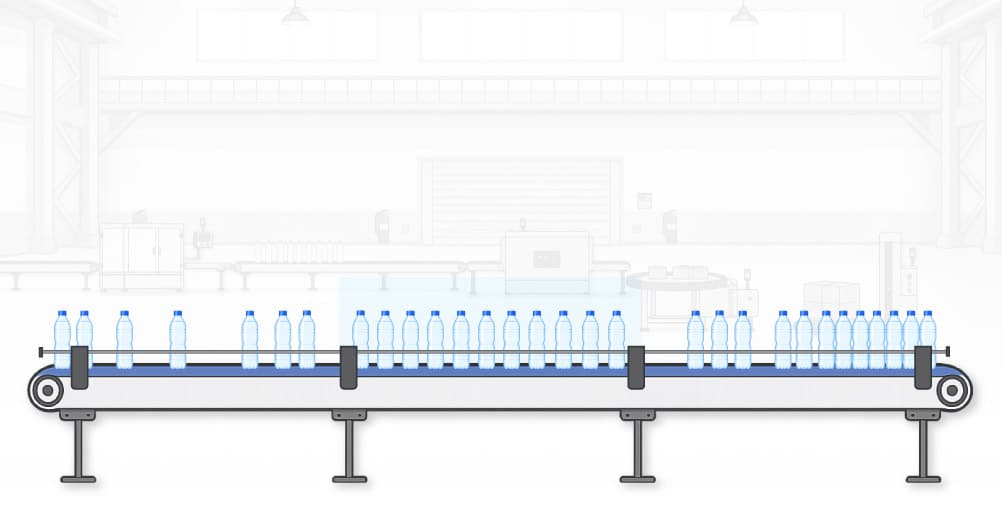
At this point, the behaviour of the line becomes more abrupt.
A minor variation upstream no longer smooths out as it travels. It builds until it reaches a point where there is no capacity left, and then shows up as a visible disruption.
This is often where stops occur.
From an operational point of view, the focus goes to the machine where the stop happens. In reality, it is simply the point where the system can no longer absorb what has already built upstream.
When space is available, the line has resilience. When that space is gone, the same system becomes sensitive and less predictable.
This is where problems that begin elsewhere become visible, not because they started there, but because there is nowhere left for them to go.
The question is not where the disruption becomes visible, but where it began before the system lost the space to absorb it.
About the Author
Jon works with manufacturing teams to understand how packaging lines behave under real operating conditions and where reliability is lost across the system.
His work focuses on how planning decisions, system design, and equipment interaction influence overall line performance and long-term stability.