
Faster packaging line recovery often becomes harder to stabilise after short interruptions and uneven restart behaviour.
At first the increase looks positive. Product moves quicker, filler speed rises, and output appears to improve. Then a short interruption happens and the line no longer returns cleanly to one steady rhythm afterwards.
You usually see it after something small. A capper stops briefly for 15 or 20 seconds, product backs up behind it, operators clear the stop, and the line restarts. Upstream begins pushing harder to recover the lost output while downstream sections take longer to settle. Bottles begin closing together through one section, accumulation changes shape during catch-up, and release no longer returns evenly through the rest of the line.
The line is moving again, but movement is not the same as stability.
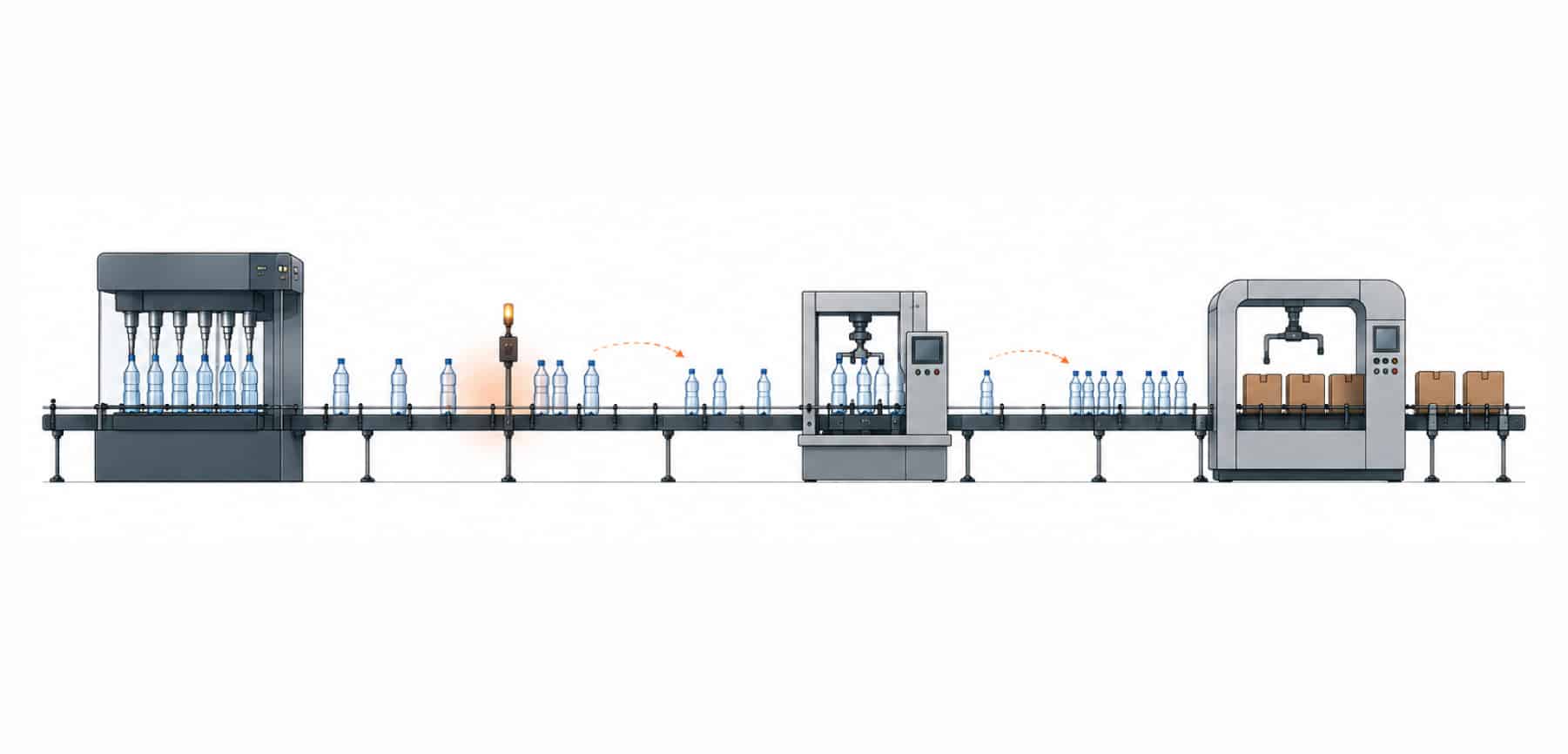
At higher speed, small spacing changes travel further through the system before recovery has fully settled. The line looks busier because more correction is happening inside the flow.
This is why higher rated speed does not always produce steadier output across a shift.
The issue is rarely whether the machines are capable of running faster.
It is whether spacing, accumulation and recovery can keep returning product to one repeatable rhythm after interruptions occur.
Once recovery stops settling cleanly, the line gradually spends more time catching up than running steadily.
The faster the recovery push becomes, the harder it often becomes for the line to return cleanly to the rhythm it had before the interruption.
About the Author
Jon works with manufacturing teams to understand how packaging lines behave under real operating conditions and where reliability is lost across the system.
His work focuses on how planning decisions, system design, and equipment interaction influence overall line performance and long-term stability.