
A short stop can look too small to explain the loss that follows. The line pauses briefly, the issue is cleared, product starts moving again, and on paper everything appears recovered.
You usually see it after something simple. A capper trips briefly, a label feed resets, operators clear the stop, and bottles begin moving again.
But the first few groups return unevenly.
Accumulation changes shape during restart, spacing no longer rebuilds cleanly, and downstream equipment begins spending the next few hours absorbing small surges instead of running steadily.
That is often where the real loss begins.
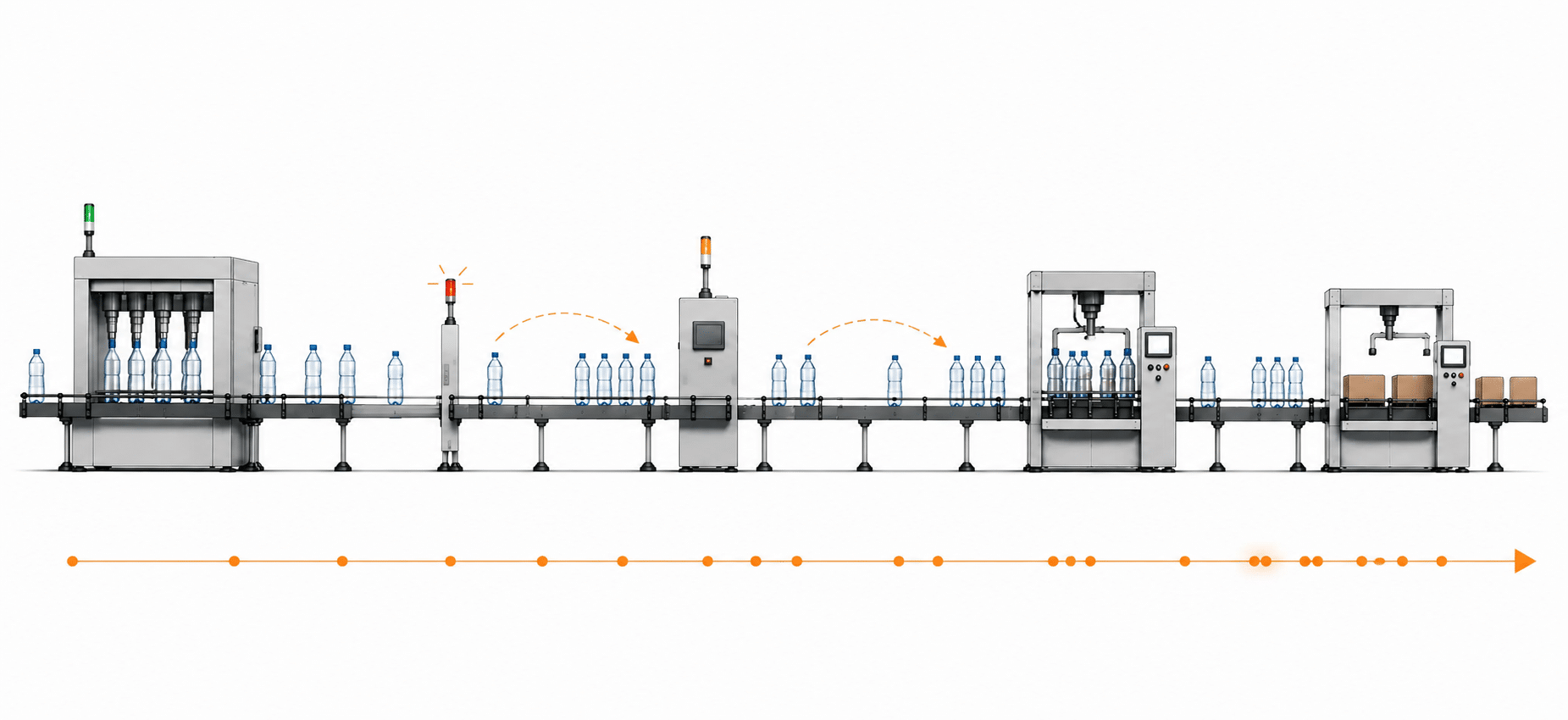
The stop itself may only last a few seconds. The bigger issue is that the line does not come back in the same condition afterwards. Upstream sections push harder to recover lost movement while downstream sections take longer to settle, and the flow never fully returns to the rhythm it had before the interruption.
Nothing dramatic may happen immediately. The line keeps running, product keeps moving, and output still appears acceptable.
But stable output becomes harder to hold because the recovery never fully settles.
A short stop is easy to measure.
The recovery afterwards is where performance is often lost.
Once accumulation stops releasing product evenly after restart, the system often begins carrying instability further through the line for the rest of the shift.
About the Author
Jon works with manufacturing teams to understand how packaging lines behave under real operating conditions and where reliability is lost across the system.
His work focuses on how planning decisions, system design, and equipment interaction influence overall line performance and long-term stability.