
The packer is often the first place a line problem becomes obvious, but it is not always where the problem began.
A line may look as if it is stopping at the downstream end. Operators clear the packer infeed, restart the section and get product moving again. For a short time, everything appears recovered. Then the same stop returns.
You usually see it after a short interruption somewhere further upstream. A filler drifts slightly, accumulation does not fully settle after restart, and bottles begin arriving into the packer in uneven groups rather than one steady pattern.
By that point, the flow has already changed.
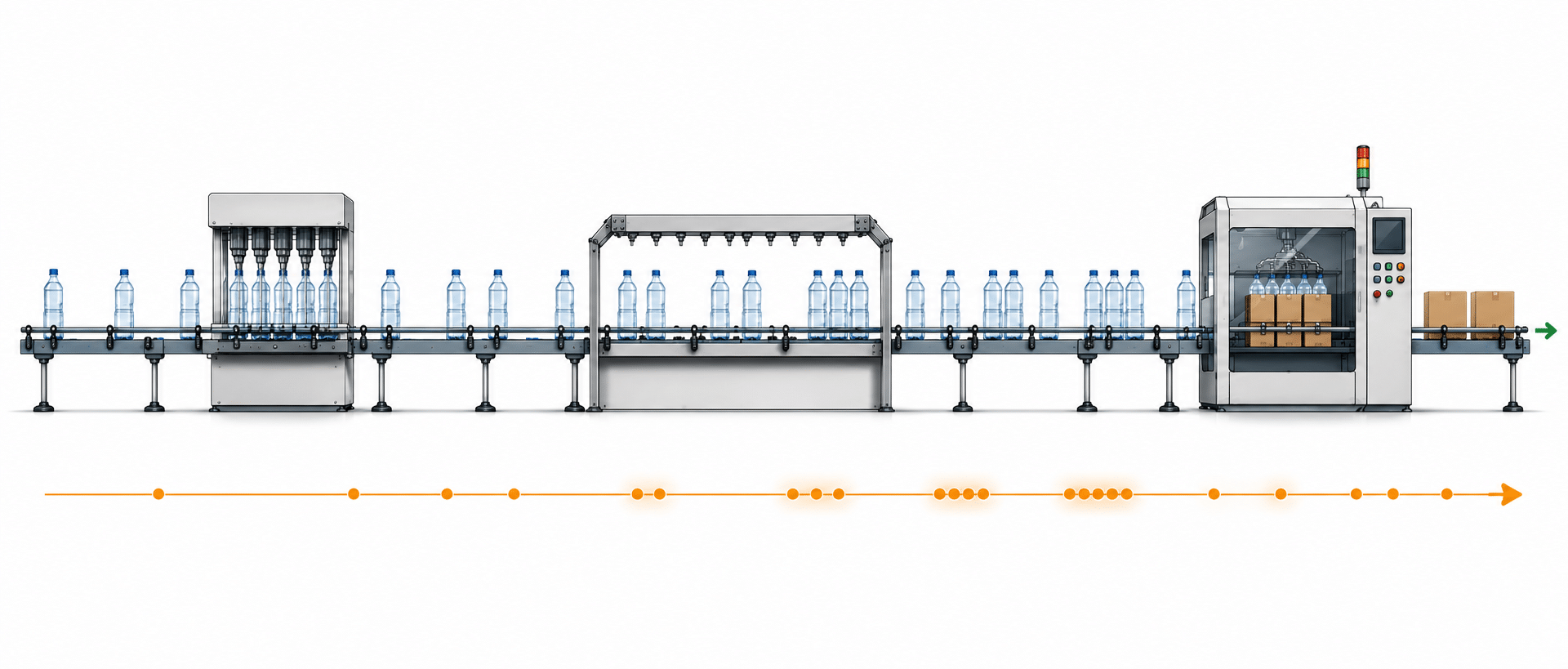
The packer eventually runs out of room to absorb what is arriving and becomes the first place the instability shows properly. It looks like a downstream machine fault because that is where the line finally loses control.
The visible stop gets cleared, but the spacing pattern feeding into it remains the same.
That is why fixes often do not hold.
The question is not only why the packer stopped.
It is what changed in the flow before the product reached it.
Once spacing and recovery stop rebuilding evenly upstream, the downstream end of the line often becomes the first place the instability finally shows properly.
About the Author
Jon works with manufacturing teams to understand how packaging lines behave under real operating conditions and where reliability is lost across the system.
His work focuses on how planning decisions, system design, and equipment interaction influence overall line performance and long-term stability.