
Many bottling lines are designed around one planned bottling line throughput figure long before the first bottle reaches production. Many bottling lines are designed around one planned bottling line throughput figure long before the first bottle reaches production. A target speed is agreed, equipment is selected, and layouts are built around the assumption that the line will sustain that number once commissioning is complete.
On paper, the figures usually appear workable. A filler may be rated for 18,000 bottles per hour, conveyors appear correctly sized, and accumulation looks sufficient between sections.
Then production starts, and the line behaves very differently under normal operating conditions.
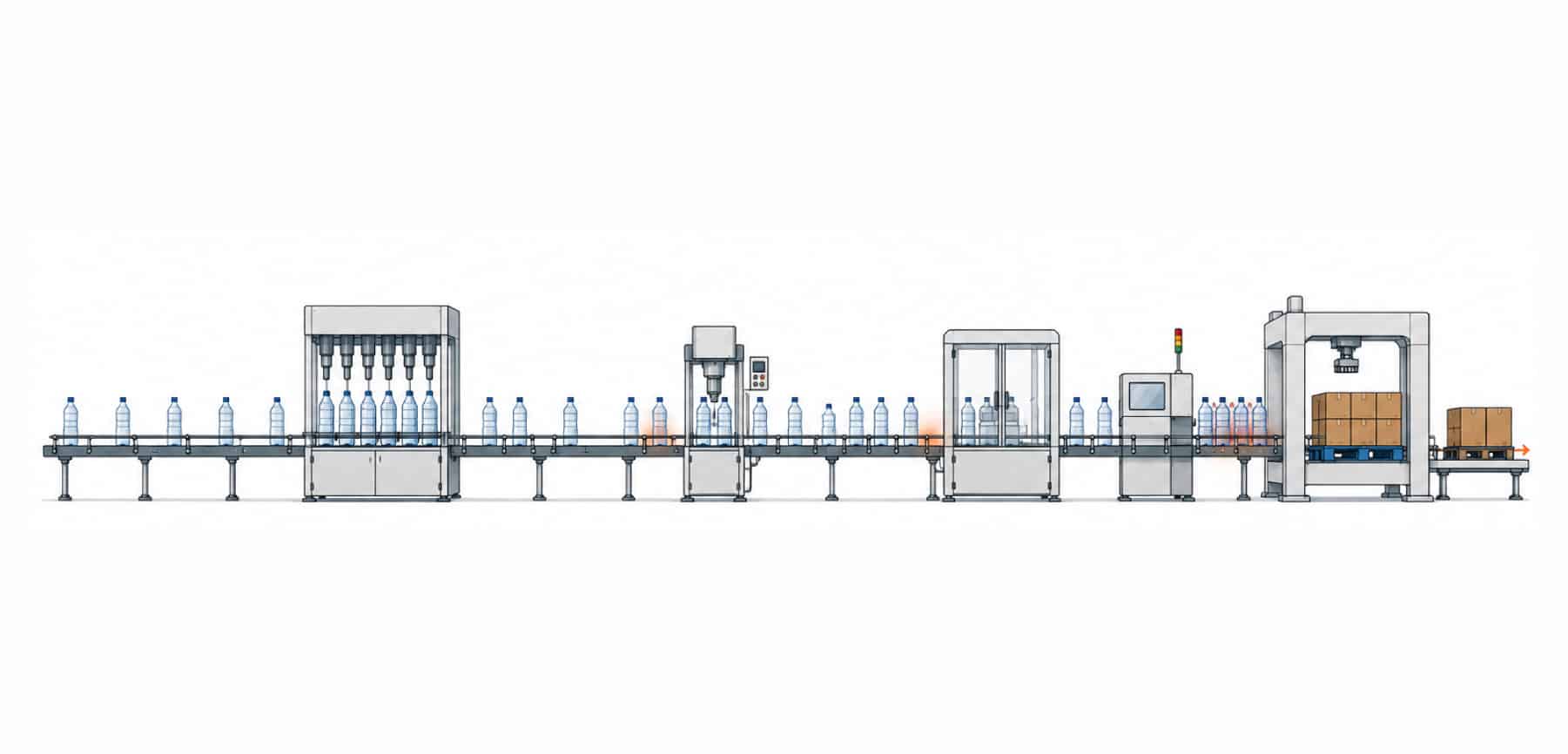
You usually see it after a short interruption. A downstream stop clears, product begins moving again, but bottles return unevenly through the line. Small groups begin leaving the filler while downstream sections recover more slowly. Accumulation releases in waves rather than one steady flow, and spacing no longer rebuilds into the same pattern that existed before the stop.
At that point, the issue is rarely machine capability on its own.
The line may still briefly reach target speed, but sustained output becomes harder to hold once normal recovery behaviour begins reshaping the flow through the system. Each interruption leaves a little more variation behind it before the next one arrives.
This is why nominal throughput and sustained throughput are often very different figures.
Most of the time, the difference was not created during commissioning.
It was already built into the assumptions the line was expected to recover around.
Once accumulation stops returning flow in one steady pattern, the system often begins carrying variation further through the line after every recovery.
About the Author
Jon works with manufacturing teams to understand how packaging lines behave under real operating conditions and where reliability is lost across the system.
His work focuses on how planning decisions, system design, and equipment interaction influence overall line performance and long-term stability.